Global Scans
·
Digital Transformation
·
Intelligence Briefing
Intelligence Briefing about Digital Transformation
Critical Trends Impacting the Organization
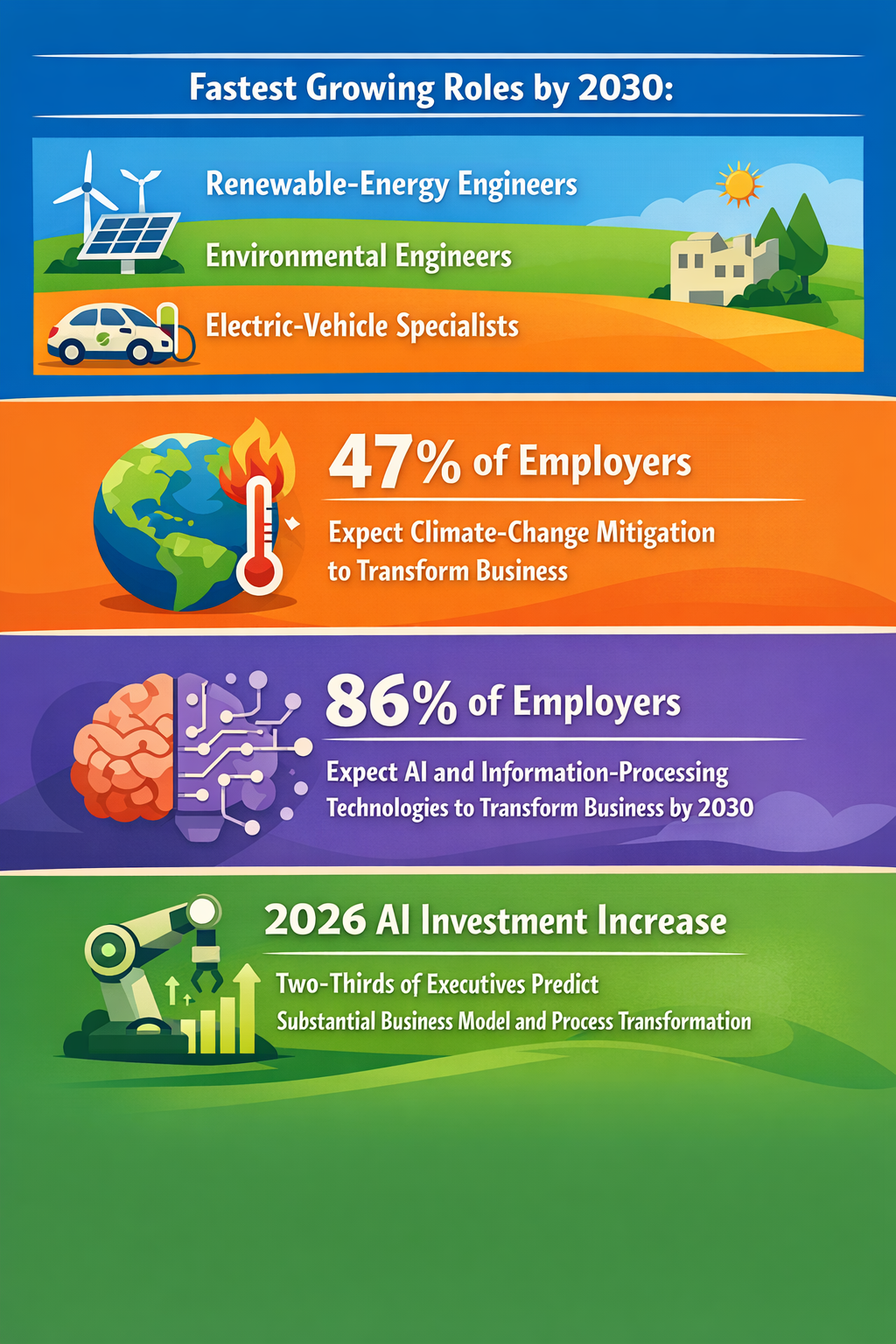
- Widespread AI adoption: 86% of employers expect AI and information-processing technologies to be the primary drivers transforming businesses by 2030 (BigSpark).
- Accelerated AI investments: Most organizations anticipate increasing AI investments in 2026, with two-thirds of executives predicting substantial or complete transformation of business models and processes through AI (Consultancy ME).
- Green transition integration: Digital technologies are enabling the energy sector’s transformation and can amplify climate change mitigation efforts (Energy Business Review).
- Shifts in labor demand: Roles related to renewable energy, environmental engineering, and electric vehicles are among the fastest-growing careers, as nearly half of employers expect climate-related change to impact their business (Sumas).
- Leadership adaptability: The ability of authorities and business leaders to convert global uncertainties into strategic opportunities is critical for national and organizational success (Mexico Business News).
Key Challenges, Opportunities, and Risks
- Challenges: Managing workforce transitions amid AI-driven automation; ensuring equitable access to digital tools; addressing cybersecurity and ethical AI governance.
- Opportunities: Harnessing AI to optimize operations and innovate services; leveraging digital technology for sustainability goals; positioning organizations as leaders in climate-positive transformation.
- Risks: Technology adoption gaps creating competitive disadvantages; regulatory uncertainties around AI and data; potential social unrest from rapid disruption in employment sectors.
Scenario Development
- Best-case: Rapid, responsible AI adoption coupled with strong governance accelerates digital transformation and green transition, creating new high-value jobs and sustainable growth.
- Optimistic moderate: AI and digital tools improve efficiency and climate outcomes, but progress is uneven across sectors; some workforce displacement occurs, mitigated by reskilling initiatives.
- Challenging moderate: AI investment growth stalls due to regulatory uncertainty and cybersecurity threats; climate-related roles expand but fail to offset broader employment disruptions.
- Worst-case: Fragmented adoption of AI and green technologies leads to stalled innovation, increased inequality, regulatory clashes, and failure to capitalize on sustainability transformations.
Strategic Questions for Senior Advisors
- How could we proactively manage workforce shifts to maximize inclusivity and resilience amid accelerating AI and green technology adoption?
- What governance frameworks could ensure ethical, transparent, and secure deployment of AI in core business processes?
- In what ways could digital transformation be leveraged to amplify our organization’s contributions to climate mitigation and sustainable development?
- How could leadership better anticipate global uncertainties and convert them into strategic competitive advantages?
Potential Actionable Insights
- Organizations could prioritize investments in AI and digital skills development to prepare their workforce for transformation.
- Integrating sustainability metrics into digital transformation plans could unlock new opportunities aligned with global climate commitments.
- Establishing cross-sector collaboration on AI governance and cybersecurity could reduce risks and build stakeholder trust.
- Scenario planning exercises could help leadership anticipate disruption trajectories and tailor adaptive strategies accordingly.
Briefing Created: 20/09/2026