
From Multipolarity to Multilateral Fractures: The Quiet Rise of Geo-Technological Regulatory Fragmentation
Emerging fissures in global governance frameworks driven by technological sovereignty and geopolitical multipolarity risk destabilizing established trade and regulatory regimes. This paper reveals an under-recognized weak signal: the accelerating divergence of regulatory regimes centered on tech sovereignty ambitions tied to geopolitical blocs. Such divergence could drive a structural overhaul of capital flows, industrial alliances, and governance norms over the next 5–20 years.
While discussions on WTO reform, multipolar world order, and trade fragmentation abound, a subtly emerging inflection point is the convergence of geopolitical fragmentation with techno-regulatory sovereignty claims. This development is not simply geopolitical tension or disrupted supply chains—it implies a fracturing with systemic consequences for global economic governance, signaling a potential reconfiguration of capital allocation and industrial structure far beyond headline crises.
Signal Identification
This signal qualifies as an emerging inflection indicator, as it represents a nascent but accelerating shift in global governance from formal multilateralism towards layered, competing techno-regulatory orders anchored in geopolitical blocs. It moves beyond mere trade friction to encompass the codification of sovereignty-driven technological regimes that constrain interoperability and capital mobility. The plausible time horizon for structural effects is medium to long term (5–20 years), reflecting how regulatory architectures and capital deployment gradually realign. The plausibility band is medium given rising multipolar governance initiatives paired with unresolved institutional conflicts.
Sectors most exposed include high technology (AI, mobility, transport infrastructure), international trade logistics, financial services, and multinational enterprise governance.
What Is Changing
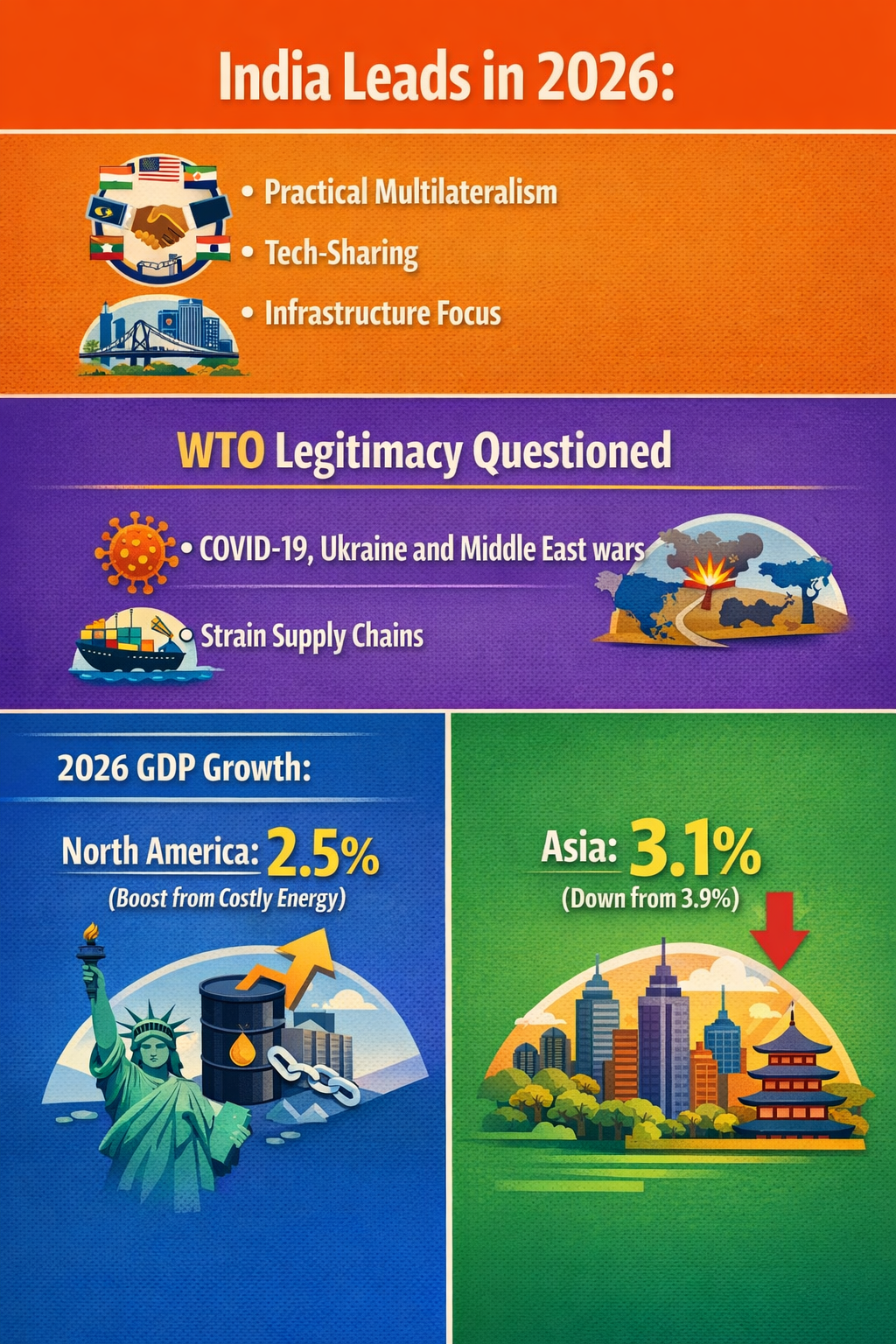
The international system faces simultaneous shocks from armed conflicts, technological disruptions, sustainability pressures, and intensifying competition over global governance rules (African Leadership Magazine 15/03/2026). These dynamics coexist with an ongoing multipolar world order that India and others predict will give rise to a “reformed multilateralism” (SWP Berlin 10/02/2026). However, the reform envisioned is unlikely to fully restore centralized global governance structures like the World Trade Organization (WTO), which continues to suffer from geopolitical gridlock and protectionism, further aggravated by conflict in key regions such as the Middle East (InsideNova 25/04/2026).
A less highlighted but critical development is the integration of geopolitical fragmentation with technological disruption—particularly in how states assert greater sovereignty through distinct technological standards, AI regulations, and critical infrastructure policies. South Korea’s calls for AI-enabled mobility and infrastructure preparedness at OECD forums highlight the growing embedding of technology in sovereignty claims and trade resilience strategies (HutchinsonG 07/05/2026). China’s steadfast participation in WTO reform coexists with its push for open economy engagement while simultaneously cultivating its techno-sovereign regulatory regime (Manila Times 20/03/2026).
Collectively, these patterns indicate a structural inflection: the rise of geo-technological blocs that embed sovereignty assertions in techno-regulatory regimes, creating decoupling pressures on global governance and international business models (AIB 12/02/2026).
Disruption Pathway
This weak signal may evolve into structural change through layered escalation. Initially, worsening geopolitical relations and conflict-induced trade disruptions place stress on global institutions such as the WTO, undermining trust and progress on multilateral trade liberalization (InsideNova 25/04/2026).
Governments will increasingly embed regulatory mechanisms to protect critical technologies, AI governance, and infrastructure resilience within national or bloc-centric frameworks, limiting interoperability. For example, Asia-Pacific nations and Europe may deepen sectoral standards bifurcations, reinforcing “techno-sovereignty” with direct implications for capital allocation as firms tailor investments to specific regulatory regimes (HutchinsonG 07/05/2026).
Supply chains may fracture as industrial alliances realign around standards that prioritize security and resilience over cost-efficiency, driving capital to “safe” jurisdictions or bloc members. This dynamic precipitates feedback loops: fragmentation compels firms to lobby for clearer, bloc-aligned rules or dual-compliance strategies, increasing operational complexity.
Traditional commerce and regulatory institutions face obsolescence unless reformed to encompass polycentric governance mechanisms enabling negotiated interoperability or risk governance. Without such adaptation, dominant industry and governance paradigms risk bifurcating along techno-geopolitical lines, formalizing a new global economic architecture.
Why This Matters
Decision-makers face profound implications as capital allocation decisions reorient toward geopolitical and regulatory risk assessment beyond conventional factors. Industrial strategies must incorporate techno-regulatory landscapes as a core variable, impacting cross-border investment and alliance choices.
Regulators confront challenges balancing national security, technology sovereignty, and the goal of frictionless trade. Failure to anticipate the fracturing of global systems could lead to suboptimal regulatory designs that exacerbate fragmentation or ossify divides.
Supply chains may experience new chokepoints and resilience demands, requiring reconfiguration of procurement and logistics strategies. Liability frameworks may shift as compliance risks expand across overlapping jurisdictional regimes.
Governance consequences include a protracted transition from rules-based multilateralism toward pluralistic, overlapping governance domains that will require new institutional innovations to manage conflicts and uphold international order.
Implications
This development may structurally change global governance by embedding techno-sovereignty as a norm, causing international business systems to fragment into competing regulatory and industrial blocs. Capital flows could increasingly fragment along these lines, and industrial alliances may no longer be globally integrated but regionalized around geo-tech clusters.
This is not a temporary crisis of multilateralism but a possible paradigm shift where multilayered governance complexity replaces centralized frameworks. However, competing interpretations exist: some argue enhanced regionalism or plurilateralism may improve governance agility; others warn it risks sustained fragmentation and economic decoupling.
The signal should not be conflated with short-term protectionist cycles or discrete geopolitical crises but understood as an inflection in the architecture of global economic governance and corporate strategy.
Early Indicators to Monitor
- Emergence and formalization of techno-sovereignty laws or regulations regarding AI, mobility, infrastructure, and trade sectors.
- Patterns of cross-border capital flows showing regional bloc concentration or diversion.
- Standards formation activities in international forums showing fragmentation or bloc-based clustering.
- Venture funding and R&D clustering around separate technological ecosystems aligned with geopolitical blocs.
- Changes in WTO negotiation stances or institutional reforms reflecting accommodation of polycentric regulatory regimes.
Disconfirming Signals
- A decisive breakthrough in WTO reforms enabling binding, inclusive multilateral rules despite geopolitical tensions.
- Rapid global convergence on interoperable AI and technology standards led by neutral multilateral bodies.
- Substantial de-escalation of geopolitical conflicts undermining the drive for techno-sovereignty regulatory fragmentation.
- Capital and industrial alliances maintaining broad cross-bloc integration with minimal friction.
Strategic Questions
- How will your capital allocation models incorporate regulatory fragmentation risks tied to geopolitical bloc formation?
- What capabilities are required to navigate and influence emerging polycentric techno-regulatory governance regimes?
Keywords
Geo-Technological Sovereignty; Multipolar World Order; Global Governance Fragmentation; Techno-Regulatory Regimes; Capital Allocation; Trade Fragmentation; Multilateralism Reform
Bibliography
- China will continue to be fully engaged in reform of World Trade Organization or WTO and safeguard and develop open world economy. Manila Times. Published 20/03/2026.
- A multipolar world order will give rise to a reformed multilateralism. / India. SWP Berlin. Published 10/02/2026.
- International business is being rewritten in real time - by geopolitical fragmentation, technological disruption, sustainability pressures, and shifting global governance. AIB. Published 12/02/2026.
- Armed conflicts, technological disruption, trade fragmentation, climate pressures, and intensifying competition over global governance rules are reshaping the international system. African Leadership Magazine. Published 15/03/2026.
- In multilateral economic forums, South Korea called at the WTO for a joint response to expanding trade restrictions and used the OECD International Transport Forum in Germany to promote transport resilience, AI-enabled mobility, and infrastructure preparedness amid disruptions such as Hormuz. HutchinsonG. Published 07/05/2026.
- Over four days in Yaounde, WTO members will try to revitalise an institution weakened by geopolitical tensions, stalled negotiations and rising protectionism - against the backdrop of the war in the Middle East, which poses a serious threat to international trade. InsideNova. Published 25/04/2026.